Early Spring blooming native plants

Updated: Mar 23
We’ve had quite a mild winter here in Northwestern Washington in terms of temperature. There are certainly some winters that have been so cold, so dark, and so wet that I absolutely cannot wait to see even just a little peek of bloom by early spring. With our mild temperatures and that long stretch of sunny, dry weather in January I don’t feel quite as tortured by the “Big Dark” as I have in previous years. Nevertheless, the change of seasons is one of my favorite things and I, for one, am ready to see these early bloomers pop!

Acer circinatum • Vine Maple
This native maple is small in stature and a great addition to an urban garden. While the early blooms may not be showy, it attracts a wide variety of pollinators and is a larval host to our western tiger swallowtail butterfly. It also boots fantastic fall color when sited in a sunnier location.

Arctostaphylos (various species) • Manzanita
With beautiful foliage and their signature bell-shaped flowers, the Pacific Northwest is home to a variety of these very cool plants. Typically found in drier areas and coastal locations, these important early season pollinator plants are a lovely addition to dry, sunny, gardens. The bell-shaped flowers are an important source of pollen and nectar for bees, butterflies, hummingbirds, and other pollinators.

Berberis aquifolium • Tall Oregon Grape
This plant grows as well in landscapes as it does in its native habitat of open woodlands and thickets on both sides of the Cascade range. The yellow flowers are fragrant and much loved by pollinators.
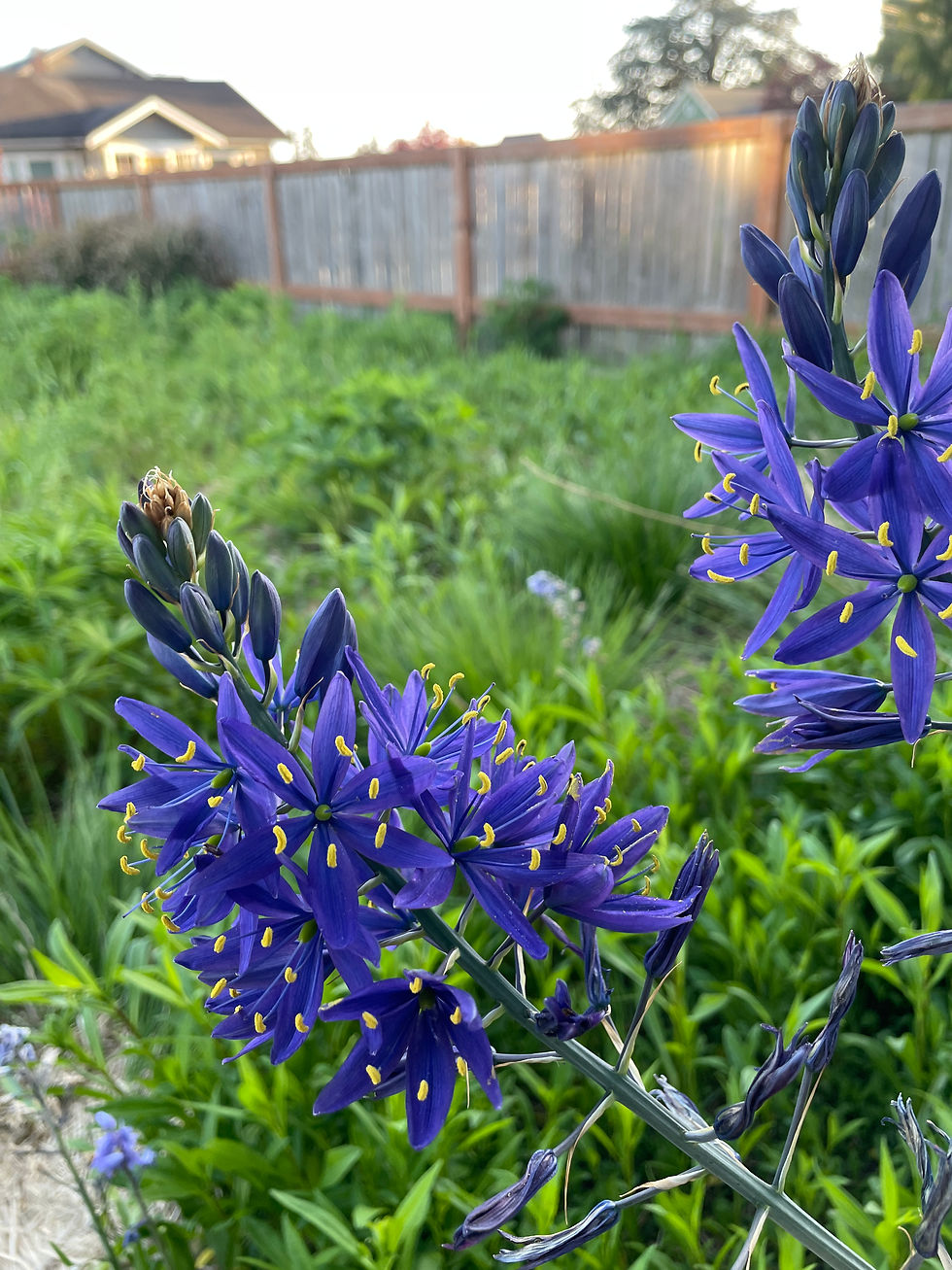
Camassia leichtlinii • Great Camas
This spring ephemeral loves a site that is moist in spring but dry in summer. The iconic deep blue-violet blooms provide a beautiful show in a meadow or a pollinator garden and will attract bees, beneficial insects, hummingbirds, and butterflies, and other pollinators.

Oemleria cerasiformis • Osoberry
This woodland plant is found in most lowland forests, woodlands, thickets, and riparian areas. You’ll recognize this plant by its hanging clusters of white flowers and cucumber scented leaves. These flowers are a critical food source for pollinators early in the season.

Ribes sanguineum • Red Flowering Currant
A common native plant found in many gardens around Western Washington. The showy, pink flowers are a definite harbinger of spring. It's an important early season food source for pollinators and hummingbirds.
Resources:
Currin, Kristin and Andrew Merritt. The Pacific Northwest Native Plant Primer. Timber Press, 2023.
Xerces Society, Pollinator Plants of the Maritime Northwest Region
Washington Native Plant Society, Plants that Flower in Spring


Comments